What a Fully Staffed Villa in Bali Actually Includes — And What It Doesn't
By Luxe Haven Villas Editorial·
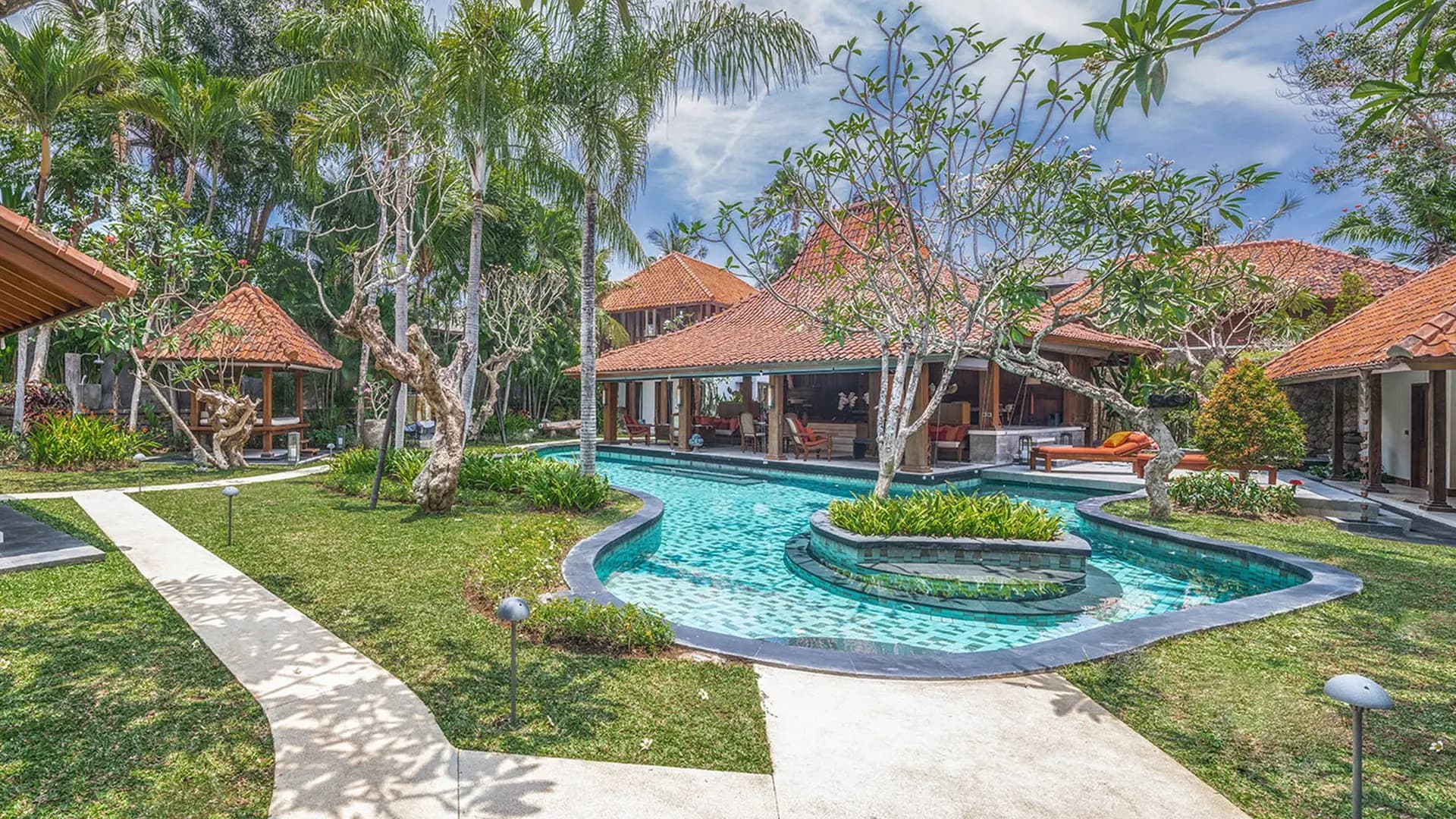
Somewhere between "hotel" and "holiday home" sits one of Bali's most misunderstood accommodation categories: the staffed villa. You book a private house with a pool, and then discover there's a small team of people who arrive each morning, ask what you'd like for breakfast, and quietly make your bed while you're swimming.
For first-timers, this can be lovely and slightly disorienting in equal measure. What are you supposed to ask for? What's already paid for? Is it rude to make your own coffee? And why did the final bill include a line item for "market shopping"?
This guide unpacks how staffed villas genuinely work in Bali, drawing on what guests most often ask us before and during their stay. Some of it is universal to the island; some of it varies villa to villa, and we'll be clear about which is which.
First, a definition: "staffed" is a spectrum
There is no industry standard for the phrase "fully staffed villa." It's marketing language, and it stretches to cover wildly different realities.
At the simpler end, a villa might have a daily housekeeper who comes for a few hours, tidies, cleans the pool area, and leaves. At the other end, you get a villa manager, a dedicated cook, housekeeping, a pool and garden technician, and security — some of whom live on site or nearby.
The single most useful thing you can do before booking is ask for the staffing schedule, not the staff list. A list tells you titles. A schedule tells you who is actually present, on which days, between which hours. "Daily housekeeping" might mean 8am to 4pm, or it might mean a ninety-minute visit. Both are legitimate; only one of them will feel like the fantasy you had in mind.
It's also worth knowing that in Bali, staffing scales with villa size and price in fairly predictable ways. A compact one-bedroom like our Canggu Studio Villa at $95 a night is designed as a self-sufficient base — you're paying for location and privacy, not a team. A larger, higher-tier property such as Abaca Villas in Canggu at $550 a night or the Uluwatu Clifftop Villa at $480 sits in the bracket where guests reasonably expect more hands-on service. Always confirm the specifics for the exact property you're booking rather than assuming price implies staffing.
The private chef question: what "included" usually means
This is where expectations and reality diverge most often.
When a villa advertises a private chef or cook, what's typically included in the nightly rate is the chef's labour — their time, skill, and the kitchen. What's usually not included is the cost of the food itself. You choose from a menu, the chef shops for ingredients, and the groceries are billed to you at cost or at cost plus a small margin.
This is standard practice across the island and it's genuinely good value. Local market ingredients in Bali are inexpensive, and a chef-cooked dinner for four often lands well below what you'd pay for the same meal at a restaurant in Seminyak or Canggu. But it does mean the number on the booking page isn't the number on your final bill, and it's worth budgeting for.
Breakfast is the common exception. Many staffed villas include a daily breakfast in the rate, prepared to order. The menu is usually short and repeats: fresh tropical fruit, eggs however you like them, banana pancakes, toast, coffee and tea, sometimes nasi goreng or bubur if you'd rather eat local. If breakfast matters to you, ask whether it's included, whether it's à la carte or a fixed set, and whether it's available for however many guests you're bringing.
How to actually work with a villa chef
A few things that make an enormous difference:
Order the night before. Balinese cooks shop fresh, often early in the morning at a local pasar. Deciding at 11am that you'd like babi guling for lunch is a request the kitchen can rarely fulfil. Give them a day's notice and you'll eat spectacularly.
Ask for Indonesian food. Villa chefs are frequently asked for pasta and club sandwiches, and they'll make them competently. But most of them cook Indonesian and Balinese dishes with real depth — sate lilit, gado-gado, ayam betutu, sayur urab, sambals made from scratch. Say the words "please cook what you'd cook at home" and see what happens. It's usually the best meal of the trip.
Be honest about spice. Balinese sambal can be genuinely fierce. Chefs will default to a milder version for foreign guests unless told otherwise. If you want it authentic, ask; if you have a low tolerance, say so early.
Flag dietary needs at booking, not on arrival. Vegan, gluten-free, nut allergies, halal — all workable, but they change how the shopping is done. Advance notice means the kitchen can prepare properly rather than improvising.
Butler service, villa managers, and who does what
"Butler" is a word that travels badly. In Bali it rarely means a formal, English-country-house butler. In practice, the role that matters most is the villa manager — the person who coordinates everything and is your point of contact for anything that isn't cleaning or cooking.
A good villa manager will arrange airport transfers, recommend and book drivers, get you a table at the restaurant that's fully booked online, source a surf instructor, organise a massage therapist to come to the villa, hail a doctor if someone's unwell, and translate when needed. This is the most underused resource in a staffed villa. Guests spend an hour on booking sites for a day trip that the manager could have arranged better and cheaper in five minutes.
Housekeeping typically covers daily tidying, bathroom cleaning, bed-making, and a linen and towel change on a set schedule — often every second or third day rather than daily, for both practical and environmental reasons. Laundry is sometimes included and sometimes charged per kilo or per piece. Ask.
And the pool: villas with a private pool, which includes most of our properties — from the Ubud Jungle Villa at $220 to the Seminyak Beachfront Villa at $520 — will have someone maintaining chemical balance and skimming leaves. In Ubud especially, where villas sit in dense green like the Ubud Rice Terrace Villa, this happens more often than you'd guess, because the jungle is relentless.
Living comfortably alongside staff
Many guests feel a low-level awkwardness about being waited on, particularly in a home rather than a hotel. A few norms that help:
Learn a couple of words. Terima kasih (thank you), selamat pagi (good morning), pagi as a casual shorthand. It costs nothing and changes the temperature of the whole stay.
Set your privacy boundaries explicitly and kindly. If you want the house to yourself between 2pm and 5pm, say so on day one. Staff would much rather have a clear instruction than guess. Conversely, if you're happy for housekeeping to work around you, say that too.
Don't apologise for asking. Guests sometimes hesitate to request things because it feels like an imposition. It isn't — it's the job, and staff generally find under-asking guests harder to serve than clear ones.
Respect that this is a workplace with a culture. Balinese households make daily offerings, canang sari, at small shrines. You may see this happening at your villa. It's not decoration or performance; it's a genuine religious practice. Watch respectfully, don't move offerings, and don't step over them.
Tipping: what's actually normal
Tipping is not obligatory in Bali. It is, however, widespread in tourism and warmly received.
The most common approach for a staffed villa is a single lump sum at the end of your stay, given to the villa manager with a clear request that it be shared among the whole team — including the people you didn't see much, like the pool technician and night security. This avoids the awkwardness of tipping individuals unevenly.
Rough guidance rather than rules: many guests leave somewhere between 5% and 10% of the accommodation cost for a week-long stay with a full team, adjusted for how much service they actually used. If you ordered three meals a day and had the manager arranging excursions daily, tip toward the higher end. If you were out most of the time, less is entirely reasonable.
Practical notes: tip in Indonesian rupiah, in cash. Foreign currency and small foreign notes are a nuisance to exchange. And if someone did something genuinely above and beyond — sat up with you when a child was sick, drove into a storm for a forgotten medication — an individual tip on top is appropriate and remembered.
A named thank-you note alongside the envelope is worth more than people realise. So is a good review that mentions staff by name.
Hidden extra charges to ask about before you book
None of these are scams. They're normal line items that surprise people who didn't ask. Check each one against the specific villa you're considering:
- Groceries for chef-cooked meals, as covered above. Ask whether it's cost-only or cost-plus.
- Alcohol. Almost never included. Imported wine and spirits in Indonesia carry heavy duties and are startlingly expensive. Local beer and arak are cheap. If a villa restocks the fridge, it's billed.
- Airport transfers. Sometimes complimentary, often not. Bali's traffic means a Seminyak transfer can take an hour and a Uluwatu one considerably longer, so this isn't a trivial cost.
- Laundry, per item or per kilo, once any included allowance runs out.
- Extra guests and extra beds. Villas are priced for a stated occupancy. Adding a person, even a small one, may add a nightly charge.
- Late checkout and early check-in. Frequently chargeable, especially in high season.
- Government tax and service charge. Check whether quoted rates are inclusive. Also note Bali's tourist levy for international arrivals, payable separately from your accommodation.
- Staff overtime. If you want dinner served at 10pm or breakfast at 5am for a sunrise trek, that's often possible — sometimes with an overtime fee. Worth asking rather than assuming either way.
- Security deposit or pre-authorisation on a card, refunded after checkout.
Ask for a written, itemised list of what's included and what's chargeable. Any reputable operator will provide one without hesitation, and it turns your final bill from a surprise into arithmetic.
Matching the service level to the trip you want
Not every trip calls for a full team, and that's the part the brochures never say.
If you're a couple on a short, active break — surfing at dawn, eating at warungs, out until late — a staffed kitchen may go largely unused. Something streamlined like the Pererenan Rice View Villa at $210 or the Seminyak Garden Villa at $180 gives you the pool and the privacy without paying for service you'll sleep through.
Where staffing genuinely transforms a holiday is in two scenarios. The first is families with young children, where in-villa meals on a toddler's schedule are worth more than any restaurant reservation. The second is groups — a villa dinner for eight, cooked in the house and eaten slowly beside the pool, is the memory people talk about for years afterwards. That's the case for a larger property like Ametis Villa Canggu at $410 or the Kayu Aya Boutique Villa at $470 in Seminyak.
The right question isn't "how staffed can I get?" It's "what will I actually use?" Answer that honestly and a Bali villa stops being a listing and starts being the reason the trip worked.
If you're unsure which of our villas suits the way you travel, ask us. We'd rather point you toward the right house than the expensive one.
Related articles
 Travel Tips
Bali in the Rain: How to Choose the Right Area (and the Right Rate) from November to March
Bali's wet season isn't a washout — it's the smartest time to book a villa if you know which areas shrug off the rain and how to negotiate the best nightly rate.