Uluwatu Clifftop Wedding Weekends: Real Costs, Permits and Guest-Villa Logistics for a 30-Person Bali Ceremony
By Luxe Haven Villas Editorial·
There's a reason Uluwatu has become shorthand for the Bali wedding. The Bukit Peninsula's limestone cliffs drop straight into the Indian Ocean, the sunsets face west over open water, and the light in the hour before dusk does things no photographer can replicate anywhere else. If you've seen a Bali wedding photo that made you stop scrolling, there's a good chance it was taken somewhere along this coastline.
What the photos don't show is the logistics. A 30-person wedding weekend in Uluwatu is a genuinely manageable project — far more so than a 150-guest affair back home — but it involves decisions most couples haven't had to make before: whether your marriage will be legally recognised or symbolically celebrated, how to move guests along a peninsula with no useful public transport, and how to house a group across villas without anyone feeling like they got the short straw.
This is a practical guide, written from the perspective of people who host wedding groups regularly. We won't quote you fantasy prices, and we'll be upfront where costs vary too much to pin down.
Why 30 Guests Is the Sweet Spot
Thirty people is small enough to feel intimate and large enough to feel like an event. More importantly, it's the size at which a Bali wedding stops being a wedding and becomes a weekend — a group small enough to eat one long dinner together, book out a couple of villas, and actually spend time with each other rather than performing receiving-line duty.
It's also the size that fits Uluwatu's geography. The Bukit is not Seminyak. Roads are narrower, venues are more spread out, and clifftop sites tend to be physically constrained — there's only so much flat ground before the land ends. Many of the most photogenic ceremony spots handle 30 to 50 guests beautifully and start to strain above that.
The Legal Side: What Actually Makes a Marriage Valid in Indonesia
This is where couples most often get surprised, so it's worth being clear.
Indonesia does not have a civil marriage system in the way Australia, the UK or the US does. Marriage is registered through religious frameworks, and this has real consequences for foreign couples. The practical upshot is that most international couples planning a Bali wedding choose one of two paths:
A legal marriage in Indonesia. This route requires documentation and coordination with the relevant civil registry office, and typically involves declarations of religion, no-impediment documents from your home country's embassy or consulate, passports, birth certificates, and translated paperwork. Requirements differ depending on nationality, religion and which office you register with, and they change from time to time. This is not a DIY exercise. Use an established Bali wedding planner or a specialist legal agent who does this weekly, and start the process months out — not weeks.
A symbolic ceremony in Bali, with the legal paperwork done at home. Many couples sign the legal documents in their home country in a ten-minute appointment with two witnesses, then fly to Bali for the ceremony they actually care about. This dramatically simplifies everything. No embassy letters, no registry timing, no risk of a document delay derailing your date. If legal recognition in Indonesia isn't specifically important to you, this is the low-stress option and it's what a large share of foreign couples do.
Separately from marriage law, you'll want to ask your venue directly about permissions for the ceremony itself. Private villas and dedicated wedding venues differ in what they allow: some have amplified-sound curfews, some require you to use in-house catering, some cap guest numbers by contract. And if any part of your celebration touches a temple site or public beach area, that's a conversation to have through a local planner who understands both the rules and the customs. Bali's ceremonial calendar is full and active — Nyepi, the island-wide day of silence, shuts down the airport and all activity, and temple odalan ceremonies can affect road access and noise expectations in specific villages. A local planner will flag these instantly.
Talking Honestly About Cost
Anyone who gives you a single confident number for a Bali wedding is guessing. What we can do is show you where the money goes, so you can build a budget that survives contact with reality.
Venue and ceremony site. The biggest single variable. Dedicated clifftop wedding venues with ocean-facing chapels or lawns command premium fees, often including a minimum spend on food and beverage. Hosting at a private villa you've already rented can be substantially cheaper, but many villas charge an event fee on top of the nightly rate, and some don't permit events at all. Ask before you book, in writing.
Food and beverage. For 30 guests, this is where quality shows. Bali's culinary scene is genuinely excellent, and a well-executed long-table dinner for 30 will often cost a fraction of the equivalent in Sydney or London. Imported alcohol is the exception — Indonesian duties on wine and spirits are high, so a heavily imported bar can quietly become one of your largest line items. Local beer and Indonesian-produced options soften this considerably.
Planner and coordination. Non-negotiable in our view. A Bali-based planner earns their fee back in vendor negotiation, permit navigation, weather contingency and the simple fact that they speak the language and know who actually delivers. Fees are commonly structured as a flat rate or a percentage of total spend.
Photography, styling, hair and makeup, entertainment. Bali has a deep bench of talent here, including internationally recognised photographers. Rates span an enormous range. Book the photographer early — good ones are reserved a year ahead for peak dates.
Accommodation. Usually paid by guests, but you're the one coordinating it. More on this below.
The contingency line. Build in 10–15%. Something always comes up: an extra transfer, a rain plan, more chairs, a last-minute dietary requirement.
Where to Put 30 People
Here's the logistics problem that couples underestimate. Thirty guests do not fit in one villa. What works is a small cluster: a hero property for the couple and immediate family, plus nearby villas absorbing the rest.
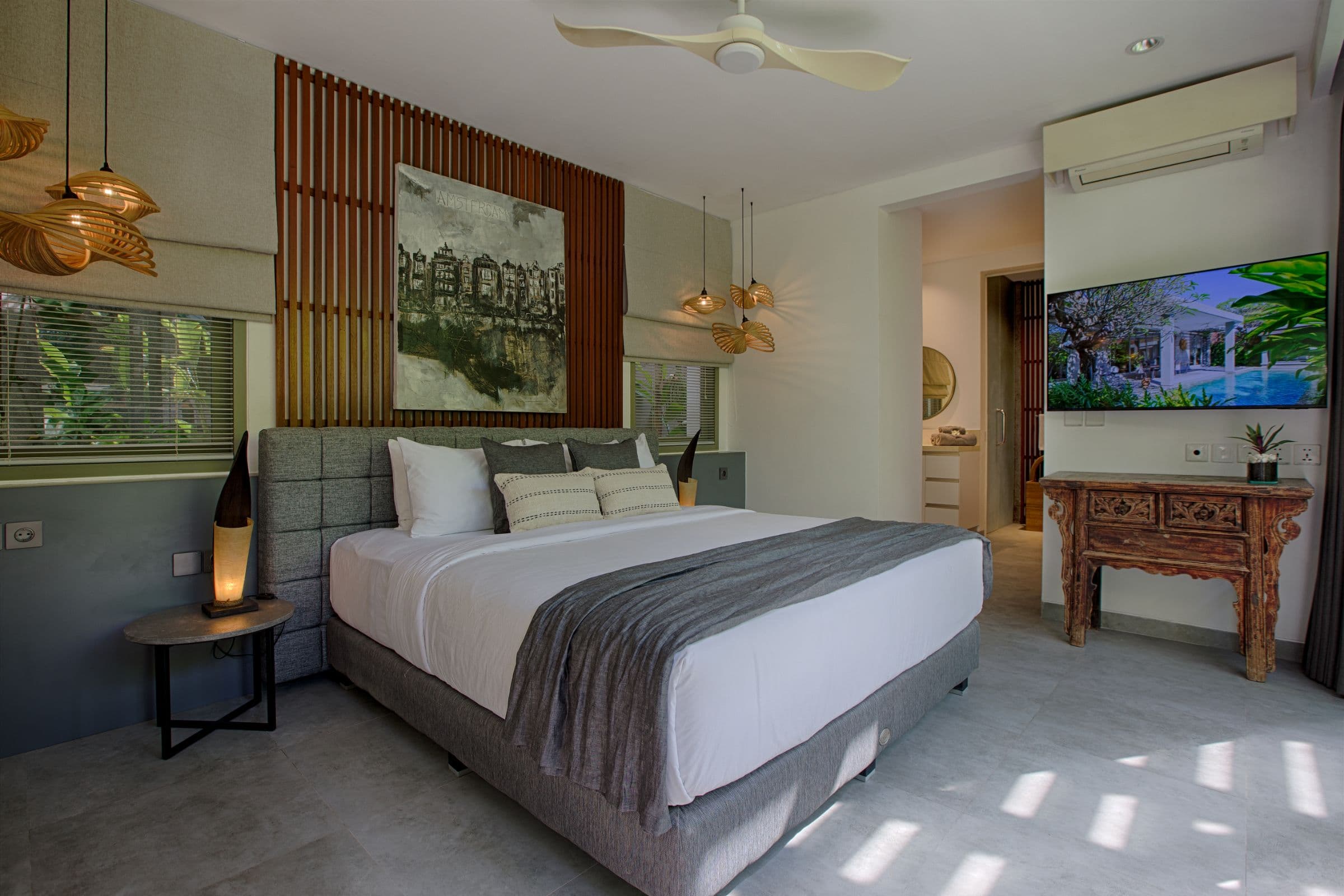
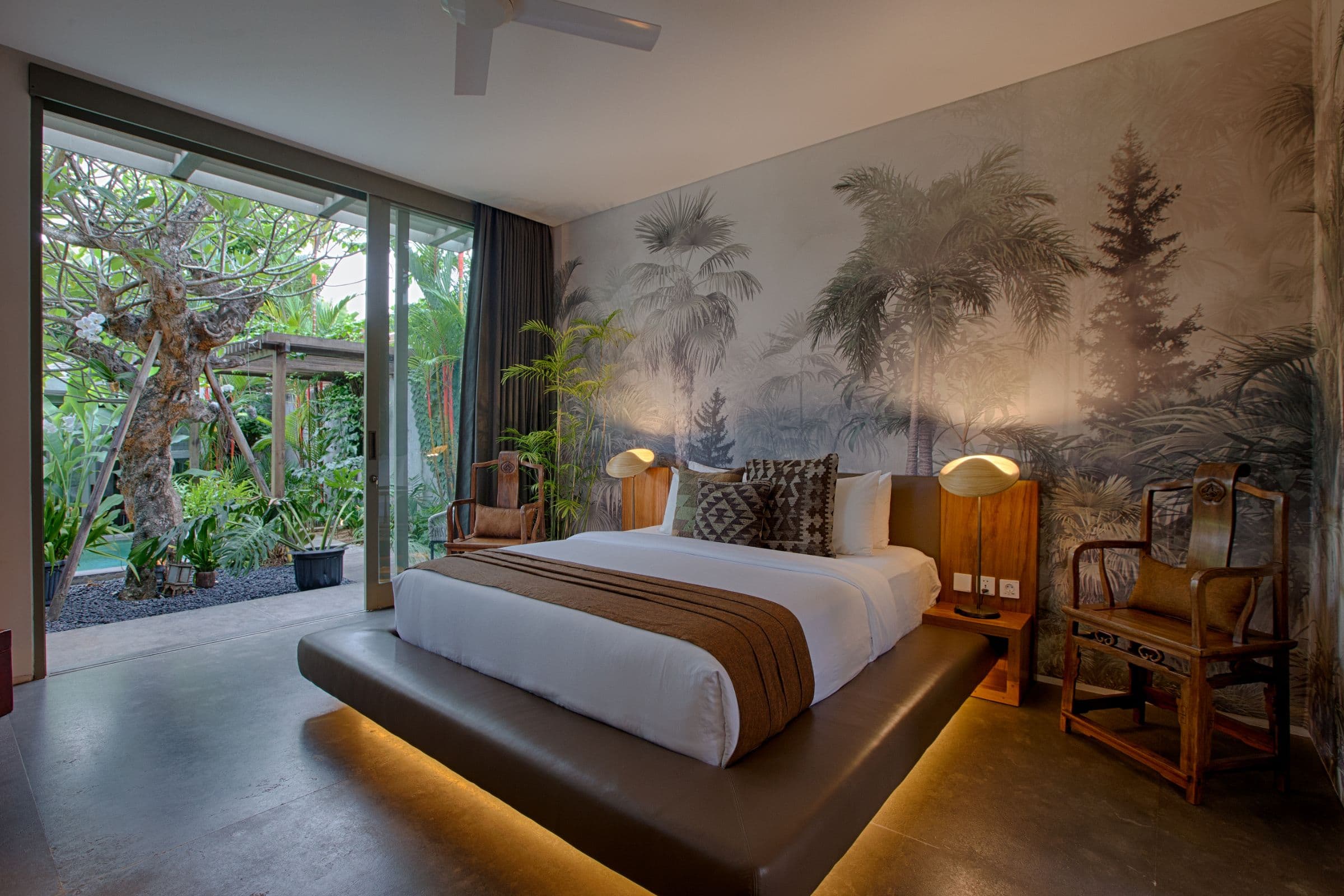
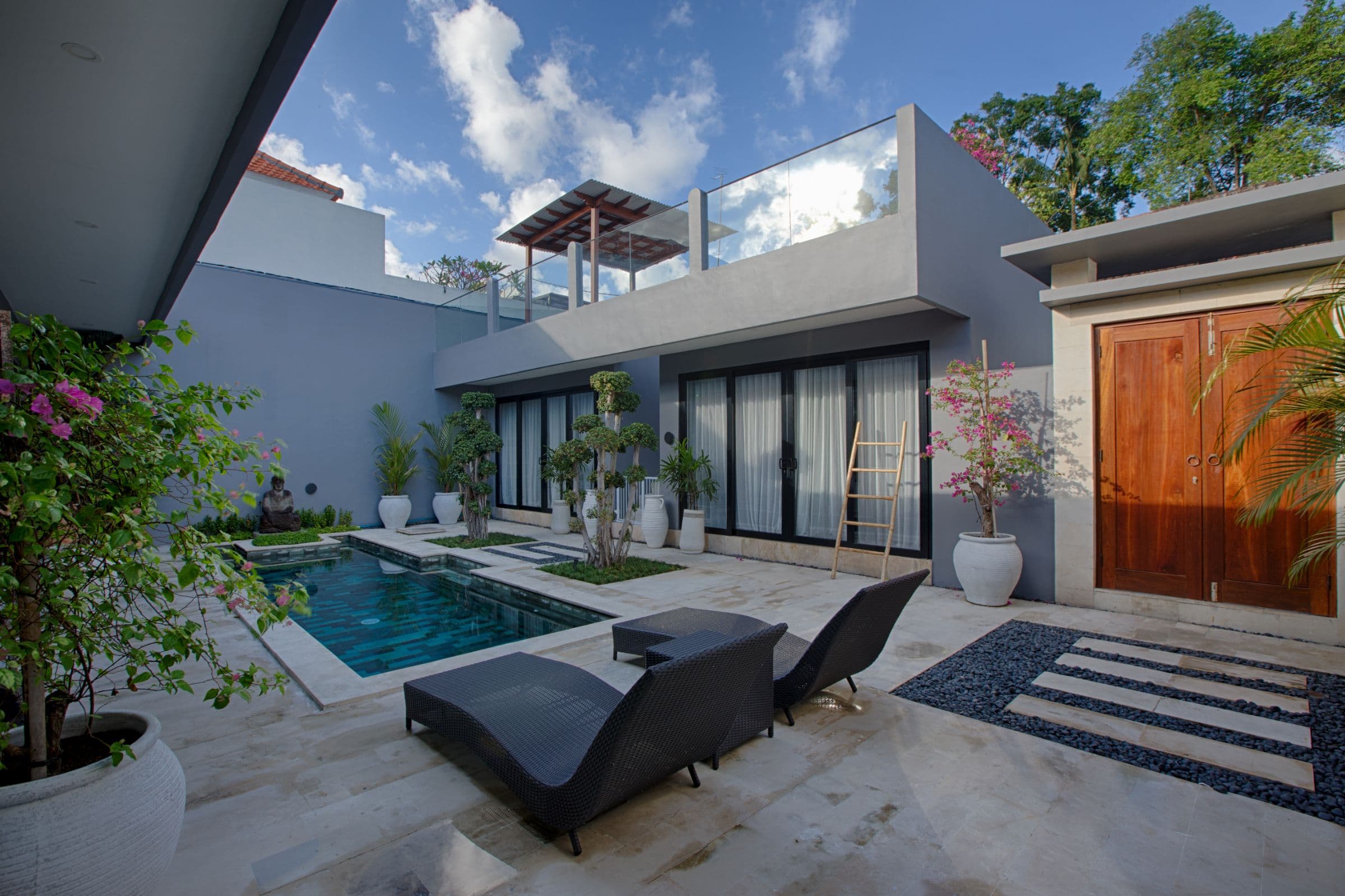
The couple's base. Uluwatu Clifftop Villa at $480 per night is the natural anchor for an Uluwatu weekend — a private pool, air conditioning and WiFi, and a location that keeps you close to the ceremony sites and cliff-edge sunsets that brought you to the Bukit in the first place. For a three or four-night stay, this becomes the calm room you return to when the day is over: getting-ready photos in the morning, a swim before dinner, and no commute across the island.
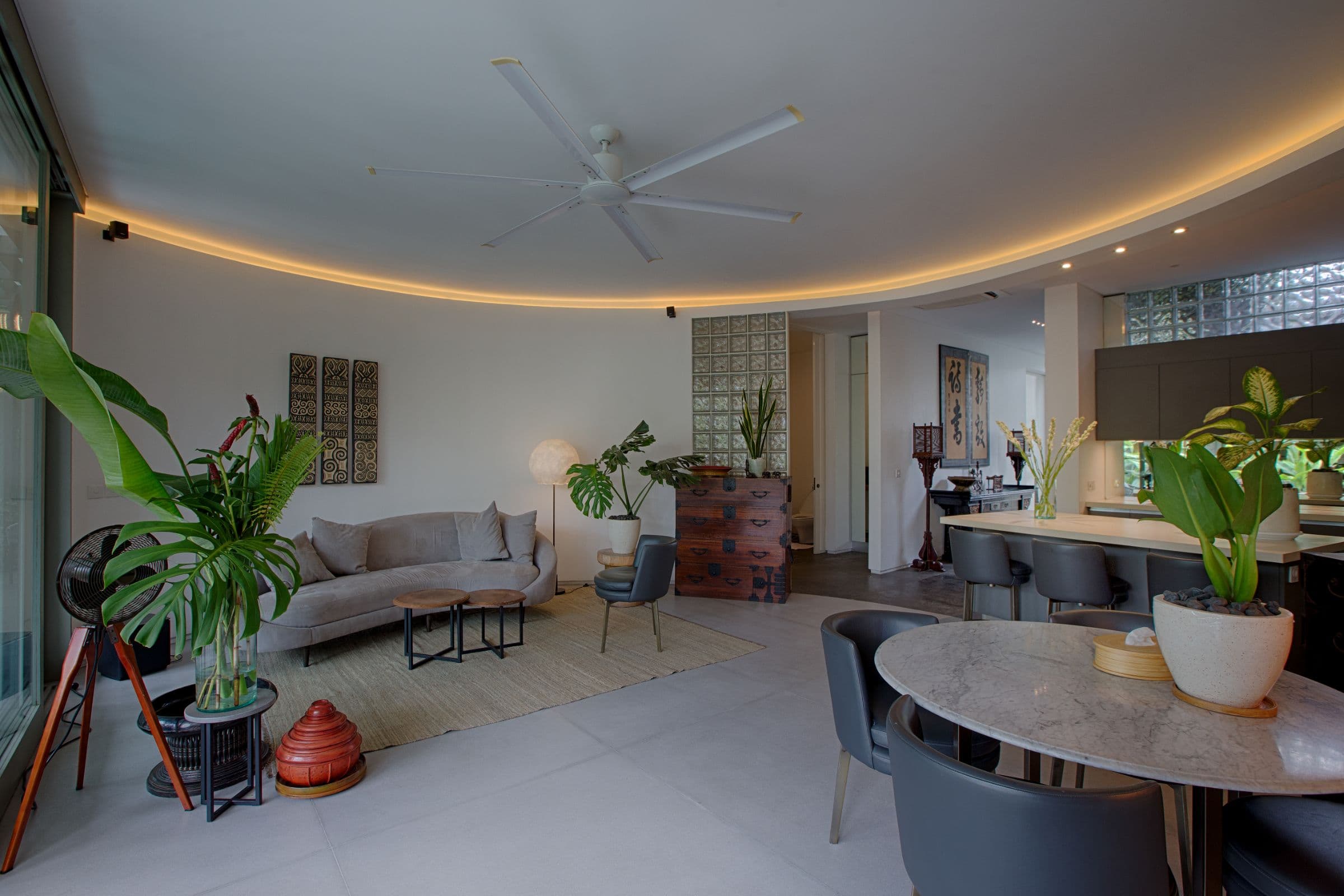
Family and the inner circle. The Young Villas – Dolce, Bingin sits in the Uluwatu area with rates from $180 to $495 depending on the configuration you take, free WiFi throughout, a dining table for long breakfasts, and free parking on site — which matters more than you'd think on the Bukit, where street parking is scarce and every group ends up with hired cars and drivers. That range makes it flexible: a place to put parents in the higher-end space and cousins in something simpler.
The overflow, and a change of pace. Not every guest wants four straight nights on a clifftop. Some will treat your wedding as the anchor of a longer holiday, and it's worth pointing them toward a second base for the days either side. Mulia Villas Bali in Nusa Dua, at $340 per night with a private pool, suits families who want calmer swimming water and a resort-area rhythm — a straightforward drive from Uluwatu. Guests who want beach clubs, restaurants and shopping after the wedding often shift north; Seminyak Garden Villa at $180 per night is an easy recommendation for that, with a private pool and a location that puts Seminyak's dining within walking or short-scooter distance.
Our advice: pre-select three or four properties at different price points, share them with guests early, and let people choose. Don't try to book everyone yourself — you'll end up managing thirty sets of preferences and payment schedules. Curate, then delegate.
Moving People Around
Uluwatu's roads were not designed for wedding convoys. Plan transport as a formal part of the day, not an afterthought.
For 30 guests, hire private drivers with vans and schedule departure times per villa. Build in significantly more travel time than the map suggests — an hour to Seminyak on a map can become two in Friday evening traffic, and the roads around Pecatu and Bingin narrow to a single lane in places. Ride-hailing apps work inconsistently in parts of the Bukit and are restricted in some areas by local agreement, so don't let guests assume they'll just call a car at midnight. Arrange the return trip in advance.
Airport transfers are worth centralising too. Collect flight details from guests six weeks out and have your planner build a pickup schedule. It's a small courtesy that guests remember.
Timing: Season, Light and the Rain Plan
Bali's dry season, broadly May through September, is peak wedding season for good reason — lower rainfall, reliable sunsets, dependable outdoor conditions. It's also when villas, photographers and venues book out earliest and price highest.
The shoulder months either side can be excellent value, with the trade-off of higher rain risk. Wet season rain in Bali often arrives as an intense afternoon downpour rather than all-day drizzle, which is workable if you build a plan around it: a covered alternative space, umbrellas on standby, and a ceremony time chosen with your planner's local knowledge of typical daily patterns.
Whatever the season, aim your ceremony for late afternoon. On the west-facing Bukit coast, the hour before sunset is the reason you came. Ask your photographer for the precise sunset time on your date and work backwards — most will want ceremony vows finishing 45 to 60 minutes before the sun hits the water, leaving room for portraits in the best light of the day.
A Realistic Timeline
Twelve to nine months out: Set your date, decide legal versus symbolic, engage a Bali planner, and lock the ceremony venue and photographer. Reserve the couple's villa.
Nine to six months out: Confirm the villa cluster for guests and send accommodation options with the save-the-date. Begin legal paperwork if marrying in Indonesia. Book catering and key vendors.
Six to three months out: Finalise menus and drinks, styling, entertainment, and hair and makeup trials. Confirm the rain contingency in writing.
Three months to one month out: Collect flight details, build the transport schedule, confirm final numbers and dietary requirements, and send guests a simple one-page itinerary with villa addresses, driver contacts and a WhatsApp group link.
The week itself: Arrive at least three days early. Sleep, adjust to the time difference, walk the venue with your planner, and eat one very good meal before the wedding day rather than after it.
The Part Worth Protecting
The thing couples say most often after a Bali wedding weekend is that the ceremony was beautiful, but the days around it were what they'll remember: breakfast on a villa terrace with people who flew across the world, a late swim after the reception, the strange and lovely feeling of everyone you love being in one place with nowhere else to be.
Protect that. Don't over-programme the weekend. Leave gaps. Choose villas where people can gather without a reservation, and let the island do the rest.
If you're mapping out a wedding weekend and want help working out which villas can realistically absorb your guest list, get in touch with dates and numbers — we can talk you through what's available and what makes sense geographically before you commit to anything.
Related articles
 Weddings & Celebrations
The Perfect Bali Honeymoon Split: Five Nights in Ubud, Four Nights on the Bukit Coast
A practical, romantic nine-night Bali honeymoon plan — jungle first, cliffs second — with real transfer times, daily pacing and an honest budget breakdown.